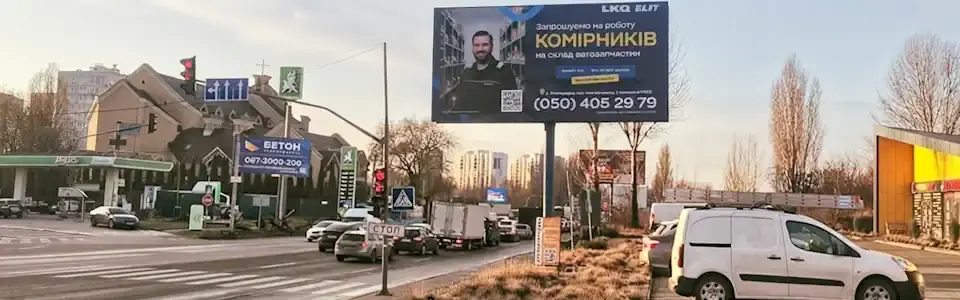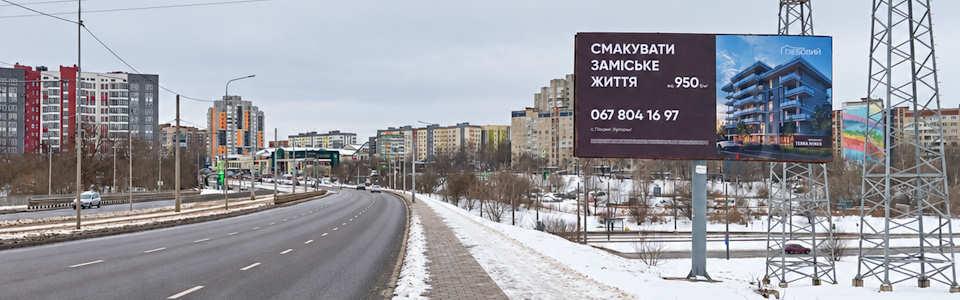

Out-of-home advertising helps sell real estate when it is built around the buyer's journey: people first notice the developer's brand, then remember a specific residential development, and finally receive a clear reason to contact the sales office as they move closer to a decision. In contrast, buying "prestigious" billboards in the city center without a strategy can burn through the budget without producing a noticeable increase in calls. Results depend not on the most expensive individual advertising face, but on a coordinated system of locations, formats, and messages for different sales stages.
Planning should begin with the business objective, the geography of demand, and the available budget - not with a list of vacant advertising faces. This is the approach used by Рекламна Агенція Billboards: an end-to-end campaign covers audience analysis, relevant location selection, media planning, design, printing, installation, and placement control. This matters to developers because one location plan rarely performs equally well for both brand awareness and inquiry generation.
How does out-of-home advertising move a buyer from awareness to inquiry?
Advertising should perform a different role at each stage of residential sales. At launch, it creates awareness; during active construction, it reinforces trust and specific advantages; and closer to purchase, it simplifies the next step: making a call, visiting the website, coming to the sales office, or booking a viewing.
- Introducing the developer. At this stage, out-of-home advertising, or OOH advertising, should make the brand recognizable in the relevant part of the city. The message only needs a name, a distinctive visual identity, and concise positioning: family housing, business-class apartments, a suburban development, or another clear concept.
- Presenting the residential development. Once the audience has seen the brand, the creative can name the project and highlight its main advantage: location, building readiness, floor plans, infrastructure, the site concept, or purchase terms.
- Reinforcing confidence. The message should evolve as construction progresses. The current construction stage, a completed phase, or an opportunity to view a finished apartment gives people who postponed their decision a new reason to reconsider.
- Generating an inquiry. Closer to the site or in areas with the greatest demand potential, the message should lead to a specific action: calling, viewing floor plans, checking available apartments, or arranging a visit.
- Providing directions. Advertising structures near the development may guide rather than persuade. Here, an address, arrow, and recognizable landmark matter more than an emotional slogan.
An individual advertising face should not be judged as though it must sell an apartment on its own. Some contacts introduce the project, others bring it back into the buyer's field of attention, and the final ones show where to go next. This sequence makes the campaign easier for buyers to understand.
Where should a residential development look for its audience?
Potential buyers should be reached not only near the construction site but also along their regular routes. A useful media plan considers where people currently live, where they commute, which roads they take home, and which parts of the city they visit regularly.
Routes between residential districts and the city center create repeated contact with residents who make the same journey every day. If the development is in a suburb or across the river, it makes sense to cover directions from which moving to the new property would be a logical choice. The address is not the only important detail: the viewing side matters too, because morning and evening traffic can receive different messages.
City exit routes are relevant for suburban residential developments, cottage communities, and projects near major highways. Billboards along these roads can first introduce the development and then remind drivers about it closer to the required turn. A coordinated sequence of creative makes the route to the property easier to understand than a single isolated contact.
Business districts provide access to audiences with particular lifestyles and everyday needs. Business-class housing can focus on shorter commute times or the quality of the environment. A project for a broader market can emphasize clear purchase terms, transport access, or move-in-ready apartments. The message should reflect the buyer's actual motivation rather than the prestige of the advertising location itself.
The area surrounding the development serves as both proof of presence and navigation. However, the nearest advertising face is not always the most useful one. If drivers only notice it after passing the turn or have no time to change direction, a structure placed slightly earlier along the route may bring more visitors to the sales office.
Billboards at major transport interchanges require special attention. They offer broad visibility, but a complex traffic environment reduces reading time. These locations need particularly concise creative, while contact details are often better replaced with a short website address, a recognizable project name, or a simple direction.
When should you use billboards, citylights, megaboards, building wraps, and digital billboards?
The format should reflect viewing distance, traffic speed, the medium's role in the campaign, and the type of message. A larger face is not automatically a better choice. It may create a strong presence but add little value where the task is to explain purchase terms or guide a pedestrian to the sales office.
- Billboard advertising works on urban highways, major routes from residential districts, and approaches to the development. A billboard is most effective with a short message, a strong rendering, and a project name that can be read while moving.
- Citylight advertising is suitable for central streets, transit stops, pedestrian areas, and locations near retail or business clusters. The shorter viewing distance allows slightly more detail, but the creative should still communicate one main idea.
- Megaboards are useful when the message must be visible from a long distance, such as on wide highways, city entrances, or large interchanges. Their role is usually brand-led: reinforcing the developer's name or introducing a flagship development.
- Building-wrap advertising creates sustained visual presence on large facades. It can support a launch, the repositioning of a developer, or a development in an important urban district when the surroundings and visibility match the intended audience.
- Digital billboard advertising makes it possible to change the message without replacing printed material. The screen can feature the construction stage, a new phase, completed apartments, or updated purchase terms at different times. However, a single spot should not become a multi-slide presentation because viewers may only see part of it.
The formats can be combined according to function. A megaboard or building wrap establishes brand scale, a sequence of billboards keeps the project visible along the route, citylights explain the offer where viewing is slower, and digital billboards update the current sales argument quickly. In this way, out-of-home advertising works as a system rather than a collection of unrelated media.
What should the advertising creative for a residential development include?
Strong creative answers one buyer question during one contact. Trying to communicate the housing class, numerous benefits, floor plans, infrastructure, price, financing terms, and contact details at the same time turns the advertising face into small print that is difficult to process even at close range.
At Billboards, we regularly encounter developers who want to place everything on one creative. The rule of outdoor advertising is unforgiving: one contact should deliver one message. Before design begins, the team should identify the most important argument for the current campaign stage:
- Housing class establishes expectations for the visual language and tone. A premium project needs restraint and a strong image, while a mass-market offer needs a benefit that is immediately clear.
- Construction stage addresses a specific objection. At launch, the campaign sells the concept and location; later, it can show visible progress, a completed phase, or an opportunity to view an apartment.
- The key advantage should genuinely distinguish the project. Avoid a general promise such as "comfortable living" and use a characteristic that buyers can compare with their actual needs.
- Price or purchase terms are useful when they provide a strong reason to inquire. If the price requires a long explanation or depends on many variables, communicate one clear condition and invite the audience to request details.
- The next action must suit the viewing environment. On a high-speed road, use a recognizable name and short address; near the property, show the route to the sales office; and in a pedestrian area, use a QR code or specific offer.
A residential development may use several creative versions, but they should look like one campaign. Consistent colors, typography, renderings, and message structure help people connect repeated contacts even when the main argument changes between locations.
How should a developer plan a campaign around its objective and budget?
Expert planning begins by setting a priority: launching a new brand, supporting a specific development, selling the remaining apartments, introducing a new phase, or increasing visits to the sales office. Only then should the team compare addresses, formats, and placement periods.
The Billboards approach is to build an end-to-end campaign around the client's objective and budget. The plan assigns a role to each location rather than merely listing available advertising faces: reach on major roads, repeated contact along daily routes, targeted messaging in business districts, and navigation near the residential development. The creative is then adapted to each format, production and installation are arranged, and placement is monitored through photo reports.
With a limited budget, a concentrated presence along several well-supported routes is usually more useful than scattering isolated structures across the entire city. Priority can be given to districts that already generate inquiries, routes leading to the property, or clusters where the intended audience lives and works. A larger campaign expands this logic without changing it: every additional advertising face should have a defined function.
How can inquiries from out-of-home advertising be tracked?
Measurement should combine direct response signals with evidence of the campaign's wider influence because buyers do not always call immediately after seeing an advertising face. Someone may notice the name in the city, search for the development later, compare it with competitors, and only then contact the sales office. If only the final digital click is counted, the contribution of the offline contact remains hidden.
A practical tracking toolkit can include:
- a dedicated phone number for the campaign or a group of locations;
- a short URL leading to a dedicated landing page with UTM parameters that identify the traffic source;
- a QR code on citylights and other faces that provide enough time for interaction;
- a separate viewing-request form;
- a required inquiry-source field in the CRM, the system used to record interactions with potential buyers;
- sales questions such as "Where did you first see the development?" and "What prompted you to contact us now?";
- a comparison of branded search activity, direct website visits, calls, and sales-office visits before, during, and after the placement period.
Different phone numbers, page addresses, or CRM labels can be assigned to separate location clusters. This makes it possible to compare formats and routes, such as a corridor from a residential district, a business district, and the area near the property. A QR code on a high-speed road should not be treated as the primary indicator because the viewing conditions do not encourage scanning. Name recognition, branded searches, and later inquiries are more meaningful for that type of location.
The data should be reviewed together with the sales team. If the audience recognizes the development but does not book a viewing, the problem may be the offer, landing page, or call handling rather than the locations. If inquiries come from the intended districts but people confuse the name or do not understand the advantage, the next campaign wave should simplify the creative and strengthen a single argument.
Looking for an effective location plan for your residential development?
A successful sales launch or support for a new construction phase requires the right advertising faces along potential buyers' routes. High-demand locations should be booked in advance, so media planning should not be postponed.
Entrust the process to the Billboards expert team. Send us the housing class, property location, budget, and current sales stage, and we will prepare a step-by-step location plan for you at no cost - from brand-building megaboards to directional citylights near the sales office.
Submit a request, and we will show how OOH advertising can generate real visits rather than reach alone.